Aristotle's Poetics
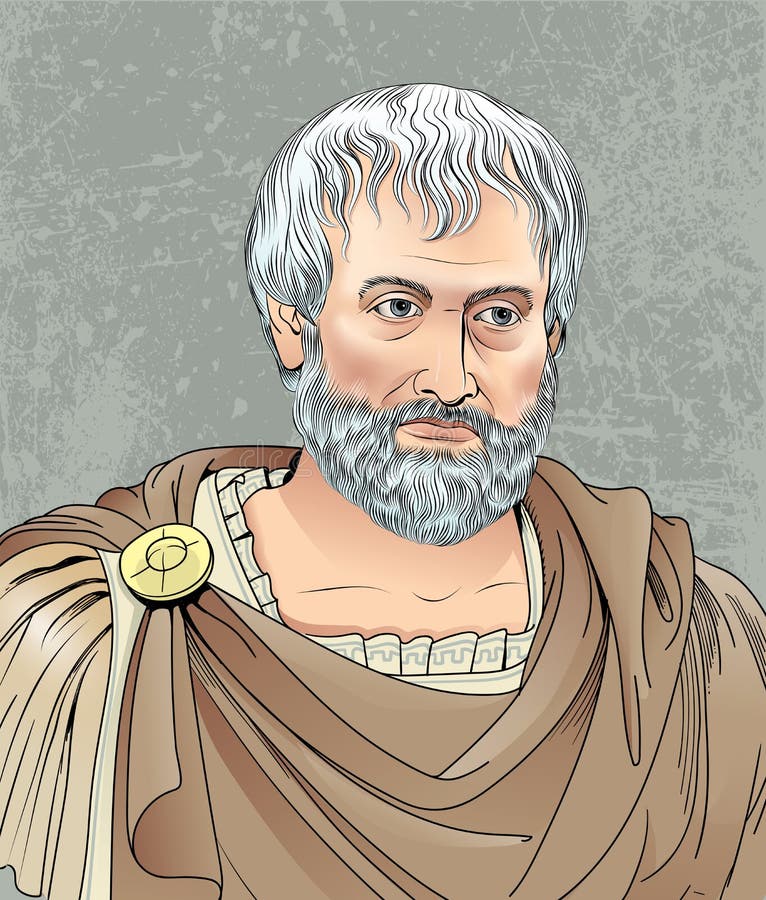
Aristotle (384–322 BC) was a Greek philosopher during the Greek Classical Period. He was a student of Plato and he established Lyceum. His followers were often called 'Peripatetic' because Lyceum was a peripatetic school of philosophy. His Poetics (335 BC) is the earliest among the surviving treatises on drama. In this work, he talks about poetry (or, the poetic art which includes verse drama, lyric poetry, and epic).
Poetics
Chapter I
Aristotle divides poetry into three kinds; Epic poetry, Drama (Tragedy and Comedy), and Lyric Poetry. He proposes to treat poetry in terms of their quality, structure, number, and parts required to compose a poem. According to him, Epic poetry, tragedy, comedy, dithyrambic poetry, flute music, and lyre music are all modes of imitation. However, they differ from one another in three respects— the medium, the objects, and the manner or mode of imitation. Let's break it down into a simpler language.
Medium means the method one uses to create art or poetry. For instance, painters use colour, a sculptor needs stone, and a poet employs language, rhythm, and harmony, either singly or all of them together.
For there are persons who, by conscious art, or mere habit, imitate and represent various objects through the medium of colour and form, or again by the voice...as a whole, the imitation is produced by rhythm, language, or 'harmony' either singly or combined. (Butcher 7)
Thus, in dance, only rhythm, in flute playing, rhythm and harmony, and in tragedy, rhythm, harmony, and language are employed. he is also arguing that poetry is essentially mimetic, be it poetic or non-poetic.
Chapter II
The object is the things that are being imitated (i.e. men in action). These men must be either higher or lower in status than us. Whereas Tragedy and Epic poetry have men better than us, Comedy and Parody have men worse than us.
Since the object of imitation are men in action, and these men must be either of a higher or lower type... (11)
Chapter III
The manner or mode of imitation means whether the poet is using the mode of narration or direct speech. Some poets use only narration, some use narration and a personality (as Homer does), and some use only direct speeches (as in Tragedy and Comedy).
Thus, the first three chapters discuss the three basic components of poetry. In the next chapter, Aristotle discusses why poets (or men in general) imitate and why it is not bad as Plato saw it. It seems to be an attempt to reply to Plato's claim that Poetry and imitation are harmful because it disseminates lie.
Chapter IV
For Aristotle, Poetry seems to have sprung from men's instinct of imitation implanted in them from childhood. One difference between human beings and animals is that humans are the most imitative creatures in this world. from the beginning of our life, we learn things through imitation. Also, there is a universal pleasure felt in things imitated. We love seeing likeness; we contemplate paintings and feel a sense of pleasure if the painting and the object imitated look alike.
Imitation, then, is one instinct of our nature...starting with this natural gift developed by degrees their special aptitudes, till their rude improvisation gave birth to poetry. (15-17)
In this same chapter, Aristotle talks about how drama came into being: first, there was the chorus. then Aeschylus introduced a second actor, diminishing the importance of the chorus. Then Sophocles raised the numbers to three, and eventually, 'scene-painting' was added. And it consequently led to the formation of Tragedy. Once Tragedy was discovered, dialogue came in. And with dialogue, came the iambic verse, the most colloquial of all. Then the number of episodes or acts was increased. And then, as Aristotle puts it, "These we need not here discuss." (21)
Chapter V
Aristotle tries to explain what he means when he says that comedy is the imitation of characters of a lower type. He asserts that comedy deals with the ridiculous. He further elaborates that ridiculous is ugly but not harmful to anyone. he gives an example:
...the comic mask is ugly and distorted, but does not imply pain. (21)
In this chapter, we also come to know that comedy, unlike tragedy, has no history, because it was not treated seriously at first. Then He goes on to say that tragedy shares a common ground with the Epic poetry as they both imitate in verse and deal with the characters of a higher type. But they differ in terms of their modes of imitation. Also, the length of action in Tragedy and Epic poetry is different. Because, Tragedy tries to confine itself to a single revolution of the sun, or slightly exceeds the limit.
We must understand something here. Aristotle studied the Classical Greek plays, took notes, and analyzed them to reach generalized conclusions. Near the end of chapter V, he talks about the unity of time, but he is not strict about it. Later in the 1570s, an Italian theorist, Lodovico Castelvetro formalized the three unities. Only then, did the later playwrights become rigid about it.
Chapter VI
Aristotle begins this chapter with the definition of Tragedy:
Tragedy, then, is an imitation of an action that is serious, complete, and of a certain magnitude; in language embellished with each kind of artistic ornament, the several kinds being found in separate parts of the play; in the form of action, not of narrative; through pity and fear affecting the proper operation of these emotions. (23)
This is a seven-part definition of tragedy. Let's look at these seven points.
- It is an imitation of an action, I.e., it involves mimesis.
- It is serious.
- The action is complete and has a magnitude.
- It is made up of language with artistic ornaments (such as rhythm and harmony).
- These artistic ornaments are found in the different parts of the play.
- It will be in the form of action (i.e., performance).
- It arouses a feeling of pity and fear thereby achieving a Katharsis.
»Then Aristotle asserts that any Tragedy can be divided into six parts.
- Plot, or mythos— the arrangement of incidents
- Character— the moral qualities of the agent
- Diction— the composition of the verses
- Thought— intellectual qualities of the agent
- Scenery— overall visual appearances on the stage
- Song— melody
For Tragedy is an imitation, not of men, but of an action and of life, and life consists in action, and its end is a mode of action, not quality. (27)
The plot is the soul of tragedy. The thought holds the third position on the list, the diction fourth, the song fifth, and scenery the last on the list. In the next chapter, Aristotle discusses the proper structure of a plot.
Chapter VII
Aristotle elaborates on what he means when he says the plot should be complete in itself and with magnitude. It should have a beginning, middle, and end. The middle should follow the beginning and the end should follow the middle.
A well constructed plot, therefore, must neither begin nor end at haphazard, but conform to these principles. (31)
The magnitude is also important. The magnitude or the length of a story should not be so vast that it cannot be held by memory. Just as a picture cannot be seen at once if it is too big for our eyes to capture or too small to behold.
...so in the plot, a certain magnitude is necessary, and a length which can be easily embraced by the memory. (33)
As a general rule, he suggests, the play should be of enough length to allow the character to fall from the good fortune to the bad or visa-vis.
Chapter VIII
While talking about the unity of the plot, Aristotle makes it clear that the unity of the plot does not mean that the tragedian needs to focus on the hero's whole life. The whole life of a person cannot be reduced to a single plot. That's why the playwright needs to select a series of events to make them a unified whole— as Homer does in the Odyssey— he does not include all the incidents of Odysseus' life— he includes only the important ones.
...must imitate one action and that a whole, the structural union of the parts being such that, if any one of them is displaced or removed, the whole will be disjointed and disturbed. For a thing whose presence or absence makes no difference, is not an organic part of the whole. (35)
Chapter IX
Aristotle differentiates between poetry and history. History deals with what has happened and poetry talks about what might happen. The poet and the historian do not differ by writing in prose or verse. If Herodotus had written in verse, his writing still would have been called history. So is the case with poetry. Poetry would still be called poetry if it is written in verse. The only difference between poetry and history is that the first is a more philosophical and higher thing than the latter.
Next, Aristotle talks about the best and the worst kinds of plots. The worst type of plot is the episodic one. By episodic he means the kind of plot where the episodes succeed one another without any sense of necessary sequence. In a tragedy, the best kind of plot includes unexpected events inspiring pity and fear. And this kind of effect is obtained as a result of 'an air of design', i.e., in a logical order.
Chapter X
In this chapter, Aristotle presents the concept of peripeteia (reversal of fortune) and anagnorisis (Tragic recognition) while discussing the simple and complex plot. Every plot is an imitation, but there is a distinction between the two. Simple plots start with the beginning and lead to the end without the reversal of fortune and without any recognition. But a complex plot accomplishes the change with reversal, or by recognition, or by both.
Chapter XI
Peripeteia is a change by which the action changes its direction to its opposite. The change can be from good fortune to bad or vice versa.
Thus in the Oedipus, the messenger comes to cheer Oedipus and free him from his alarms about his mother, but by revealing who he is, he produces the opposite effect. (41)
Recognition, on the other hand, is a change from ignorance to knowledge. Good plots connect anagnorisis with the reversal of fortune. A good example would be Oedipus. At the same time, he discovers the truth about his mother, and it reverses his situation from a proud king to a disgrace. In a good plot, peripeteia accompanies anagnorisis and they arouse pity and fear, and also, lead to the play's conclusion.
At the end of this chapter, Aristotle introduces the concept of suffering, the third part of a plot. The scene of suffering is basically brutal sequences such as murder depicted on stage.
Chapter XII
Chapter twelve is an interruption in the discussion of the plot. There are debates about whether or not this chapter is Aristotle's. This chapter deals with different kinds of parts into which tragedy is divided. Namely, prologue, episode, exode, and choric songs. Choric songs are divided into parode and stasimon.
Chapter XIII
Aristotle proposes that the best kind of plots are complex and they arouse pity and fear. That's why three kinds of plots should be avoided— Plot that show
- virtuous man brought from prosperity to adversity,
- bad man passing from adversity to prosperity,
- and the bad man going from happiness to misery.
For pity is aroused by unmerited fortune, fear by misfortune of a man like ourselves....a man who is not eminently good or just, yet whose misfortune is brought about not by vice or depravity, but by some error or frailty. (45)
The concept of hamartia is introduced here. The hero should not be particularly good or bad, and the misfortune should result from a hamartia or an error in judgment.
Thus, a good plot must have the following elements.
- It should be single in its issue.
- The change should be good to bad.
- The change should be the result of hamartia.
- The hero should not be worse than an average person.
Chapter XIV
The pity and fear may arise from the spectacle, but in better plots, they are the result of the inner structure of the plot. A plot should be so well constructed that if it is even listened to without any visual aid, would arouse pity and fear. Again, Oedipus is a good example to illustrate this point. If we just read Oedipus Rex or listen to the story of Oedipus the King, we feel the horror of Oedipus blinding himself as a reaction to the chain of events he discovers.
In addition to that, Aristotle talks about the circumstances that strike us most. We feel pity when a family member is killed by another. The murder may be done knowingly as Medea kills her children, or unknowingly as Oedipus assassinates his father. The third type of circumstance is where a character plans to kill another character but discovering the family connection, abstains from it.
Chapter XV
In this chapter, Aristotle discusses the character of the tragic hero and outlines four specifications.
- The hero must be essentially good (otherwise the audience would not feel sympathy for the hero).
- The virtues of the hero must be appropriate to the character of the hero. For instance, valour cannot be attributed to a character of a woman.
- The character must be realistic.
- There should be consistency in the writing of the hero. What Aristotle means is that even an inconsistent character like Hamlet should be portrayed with consistency, i.e., the character should be consistent in his inconsistency.
Next, Aristotle explains various kinds of anagnorisis. They are as follows:
- Recognition by sign— Aristotle considers this to be the least artistic kind of anagnorisis. For example, when a character finds out about another character's identity by looking at a scar or maybe a mole on the cheek, it is a recognition by sign.
- The second kind is the recognition 'invented at will by the poet'. When the character himself reveals her/his identity, it's actually the poet speaking through that character. This one is detested by Aristotle.
- Recognition is triggered by memory when a character sees something and awakens certain feelings in him.
- The fourth kind happens only as a result of a rational deduction on the part of the agent.
- There is also a kind of recognition that happens through false inference. For instance, if one thinks that only Thor can lift his hammer, then s/he can incorrectly infer that whoever lifts that hammer is Thor. But in fact, Captain America can also lift that hammer — the key point is, whoever is worthy of that hammer can lift that hammer.
- The best kind of all is that which arises from the incidents themselves, where the startling discovery is made by natural means.
- The poet should be sure to visualize the action of his drama as vividly as possible. This will help him spot and avoid inconsistencies.
- The poet should even try acting out the events as he writes them. If he can himself experience the emotions he is writing about, he will be able to express them more vividly.
- The poet should first outline the overall plot of the play and only afterward flesh it out with episodes. These episodes are generally quite brief in tragedy but can be very long in epic poetry. As an example, Aristotle reduces the entire plot of the Odyssey to three sentences, suggesting that everything else in the poem is episode.
- Every play consists of desis, or complication, and lusis, or denouement. Desis is everything leading up to the moment of peripeteia, and lusis is everything from the peripeteia onward.
- There are four distinct kinds of tragedy, and the poet should aim at bringing out all the important parts of the kind he chooses. First, there is the complex tragedy, made up of peripeteia and anagnorisis; second, the tragedy of suffering; third, the tragedy of character; and fourth, the tragedy of spectacle.
- The poet should write about focused incidents, and not about a whole epic story. For instance, a tragedy could not possibly tell the entire story of the Iliad in any kind of satisfying detail, but it can pick out and elaborate upon individual episodes within the Iliad.
- The chorus should be treated like an actor, and the choral songs should be an integral part of the story. Too often, Aristotle laments, the choral songs have little to do with the action at all.
Chapter IX-XIV
This section of Poetics deals with the diction of poetry. According to him, diction is related to an agent's thought. Next, he notes that diction can be divided into eight parts: letter, syllable, conjunction, article, noun, verb, case, and speech. We will not further discuss this section because these terms may seem identical to our modern use of them, but we need to understand that Aristotle is talking about the spoken language, and that can not be fully comprehended without the proper knowledge of Greek.
Chapter XXV-XVI
These two chapters deal with the feature of epic poetry and the differences between epic poetry and tragedy. first, let us look at the feature of epic poetry.
- It should maintain the unity of the plot.
- It should share some of the common elements of the tragedy. For example, it should be either simple or complex, and it should deal primarily either with a character or with suffering. Aside from spectacle and melody, the six parts of tragedy are all present in epic poetry, and epic poetry can also feature peripeteia and anagnorisis.
- Length—an epic poem can be as vast as a whole series of tragedies, provided it can be presented in one hearing. The plot of an epic poem can be far more expansive because it is not limited by the stage. Epic poetry can jump back and forth between events happening at the same time in different places in a way that would be impossible on stage.
- Narrative—Whereas tragedy is normally spoken in iambic meter, Epic poetry is narrated in heroic meter.
Further readings:
- S. Butcher. The Poetics of Aristotle. 2 Rev., London, Macmillan, 1898.
- "Poetics Chapters 16–18 Summary & Analysis | SparkNotes." https://www.sparknotes.com/philosophy/poetics/section8/, Accessed 13 April 2022.


Comments
Post a Comment